Chakras for Daily Life, Part 5: Vishuddha
Vishuddha, athe purification of truth
Madalina Yoga Alliance E-RYT 500
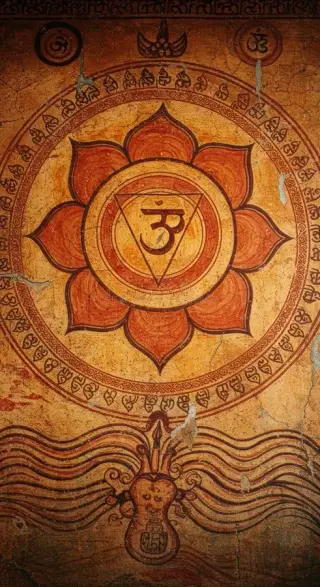
The fifth chakra, Vishuddha, is often described as the center of communication. Yet the yogic tradition invites us into something far more profound. Vishuddha is not simply about speaking. It is about purification.
The Sanskrit word Vishuddha means “especially pure.” It is the place where raw experience is refined into wisdom, where emotion becomes understanding, and where language ceases to be a reaction and becomes an expression of consciousness.
Its element is Akasha, space — the subtlest of all elements. Space does not grasp or reject. It contains. It allows. It gives room for everything to arise and dissolve. The throat carries this same quality. Before it becomes the organ of speech, it is the place where life is transformed.
THE BLUE-THROATED ONE
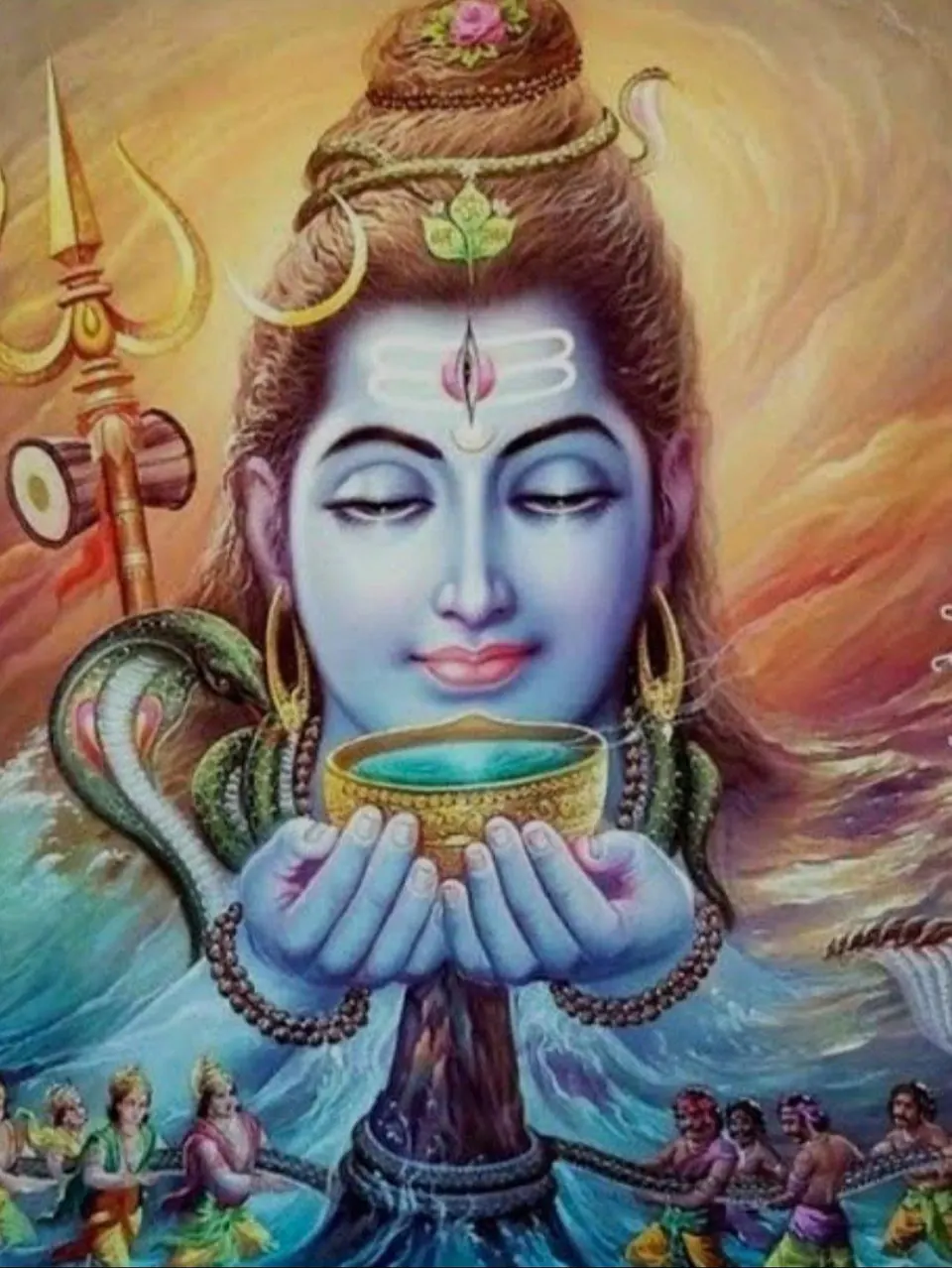
Perhaps no image captures this better than Shiva as Nīlakaṇṭha, the Blue-Throated One.
During the Samudra Manthana, the great churning of the cosmic ocean, the gods and demons seek the nectar of immortality. But before the nectar emerges, a deadly poison rises from the depths — a power threatening all of creation. Shiva drinks it to save the world, yet he does not swallow it. Held in his throat, it turns his neck blue, and he becomes Nīlakaṇṭha.
This is the teaching of Vishuddha.
We all carry poison. Disappointment. Anger. Grief. Fear. Humiliation. Every human life accumulates experiences capable of becoming bitterness. The spiritual path is not about pretending the poison does not exist, nor about projecting it onto others. The practice is to hold it consciously until it is transformed.
Like Shiva, we learn neither to suppress our pain nor to spill it into the world. We become the place where suffering ends its journey instead of beginning someone else's.
This is purification.
From this place, speech changes. Words are no longer weapons for defending the ego or proving ourselves right. They become offerings.
VĀK — THE WORD BEFORE THE WORD
This is why Satya, truthfulness, is so deeply connected to Vishuddha. In yoga, Satya is far more than honesty; it is alignment with what is real. The Upanishads declare: Satyam Jñānam Anantam Brahma — Brahman is Truth, Consciousness, and Infinity.
Truth, then, is not merely my truth. Personal opinions, emotions, and memories are all valuable, but they are also conditioned. Vishuddha invites us beyond self-expression toward something quieter and more universal. The question is no longer, “How do I express myself?” It becomes: “Can my words become transparent enough for Truth itself to speak?”
The Vedic and Tantric traditions offer a concept that deepens this immeasurably: Vāk. Vāk does not simply mean speech. It means the creative power of speech, the living force through which reality is revealed and expressed. In the Rig Veda, Vāk is personified as a goddess who declares that she moves among the gods, and that through her alone all beings eat, see, breathe, and hear. Speech, in other words, is not a human invention. It is a cosmic principle.
In Tantra and Kashmir Shaivism, Vāk is said to unfold through four levels: Para Vāk, the supreme, unmanifest word — pure consciousness before any thought or sound; Pashyanti, “that which sees,” the first intuitive flash before language has formed; Madhyama, the inner word, thought and mental language; and Vaikhari, spoken speech, the words that finally leave the mouth.
We usually assume speech begins at the lips. The tradition insists otherwise: the spoken word is only the final stage of a much deeper descent. True speech begins in silence, takes shape as intuition, becomes thought, and only then emerges as language.
Vāk is the current through which consciousness becomes sound. Vishuddha is the guardian of this sacred descent.
This also transforms the meaning of Satya. Truth is not merely saying accurate things. It is ensuring that Vaikhari — the words we finally speak — remains connected to Para, the deepest reality from which it came. When speech stays tethered to its source, words carry presence rather than noise.
THE DISCIPLINE OF LISTENING
If Vāk describes the descent of the word, Nāda Yoga teaches us how to trace it back to its source. This is why the practice occupies such an important place in the teachings of Swami Satyananda Saraswati. Nāda means vibration, or sound — yet the deepest sound is not produced by the world at all. It is the Anahata Nāda, the unstruck sound that reveals itself only when the mind becomes completely still.
Satyananda teaches that this experience cannot be forced. One simply listens. As attention follows the subtle current of inner sound, the senses withdraw of their own accord, the mind becomes one-pointed, and meditation unfolds by itself.
Vishuddha therefore reminds us that before learning to speak, we must learn to listen — to the silence beneath thought, to the vibration beneath words, to the intelligence of life itself. Only then does speech become clear. Only then does truth cease to be opinion and become presence.
WHAT CAN BE NAMED CAN BE TRANSFORMED
Modern neuroscience arrives, by its own path, at a strikingly similar threshold. The UCLA researcher Matthew Lieberman found that simply naming an emotion — “I feel angry,” “I feel afraid” — measurably reduces activity in the amygdala while increasing activity in the prefrontal cortex. Affect labeling, as he calls it, is a small act with an outsized effect: putting feeling into words helps regulate it.
It is difficult not to hear this as modern science rediscovering an ancient intuition. What remains unconscious overwhelms us. What is named can begin to transform. And what we can truthfully name, we are less likely to unconsciously project onto others.
The lower chakras teach us to survive, feel, desire, act, and love. Vishuddha asks a different question: what do you do with everything you have lived? Do you repeat your wounds? Do you hide them? Or do you transform them into wisdom?
The throat is where experience is distilled. It is the passage through which chaos becomes meaning, emotion becomes language, and silence becomes creation. It is less about communication than about transmutation.
Perhaps this is the real gift of the Blue-Throated Shiva: not the absence of poison, but the refusal to transmit it. Not the need to speak constantly, but the wisdom to know when silence is the truest language.When the throat is purified, words no longer seek approval, victory, or control. They become the natural expression of a consciousness that has learned to hold life without bitterness.And perhaps this is the deepest teaching of Vishuddha:Truth is not something we invent. It is something we become quiet enough to hear .
Affirmation & Practice: I speak TRUTH!