PRANAYAMA BEYOND OXYGEN
Carbon Dioxide, Kumbhaka ( air retention), and the Mastery of the Breath
Madalina Yoga Alliance E-RYT 500
Modern wellness culture treats breath like a fuel gauge: more air in, more oxygen, more vitality. Pranayama gets folded into the same story — breathe more, gain more. Physiology tells a stranger story. And so, as it turns out, does yoga. When we think CO2 we think asphyxiation, fear , terrible nightmares, but in a verry controled and natural Rhythm the Carbon dioxide is a lost Gem of Wisdom.
In a healthy person at rest, arterial haemoglobin is already close to fully saturated with oxygen. Breathing harder barely adds any. What actually shifts, dramatically, when we change how we breathe is a gas we usually think of as waste: carbon dioxide.
And that made me question: pranayama is not primarily an art of acquiring more oxygen. Perhaps it is an art of changing our relationship with carbon dioxide?
First, three words
Traditional pranayama (breathing mastery) is built from three movements. It’s worth having these on hand before we go further — the middle one is where most of the interesting physiology happens.
Pūraka
Inhalation — the in-breath.
Kumbhaka
Retention — suspending the breath. Antara kumbhaka holds after the inhale, bāhya kumbhaka after the exhale.
Recaka
Exhalation — the out-breath.
Kevala kumbhaka
A retention said to arise on its own, rather than being deliberately held — the “effortless pause.”
Mūrchā
Literally “swoon.” An altered state some hatha texts describe emerging from particular patterns of retention, combined with bandha and focused attention.
Bandha
An internal “lock” or muscular seal (root, abdominal, throat) often used alongside kumbhaka.
CO₂ is not simply waste!!!!
Every active cell produces CO₂ continuously. It enters the blood and drives one of the body’s most consequential reactions, the bicarbonate buffering system: CO₂ + H₂O ⇌ H₂CO₃ ⇌ H⁺ + HCO₃⁻. When CO₂ rises, pH falls. When we over-breathe and blow off CO₂, pH rises. Breathing is chemistry.
This is why vigorous breathing shouldn’t automatically be called “oxygenating.” Hyperventilation barely raises oxygen — haemoglobin is already saturated — while it substantially lowers CO₂. That drop, hypocapnia, constricts blood vessels in the brain. We can end up breathing more while reducing blood flow to the brain…Please bear with me the scientific part 😊
Oxygen has to be released, not just carried
Having oxygen in the blood isn’t the same as delivering it to a cell. Haemoglobin( the red celles in the blood) has to let go of it — and this is the Bohr effect: in active tissue, rising CO₂ and hydrogen ions lower haemoglobin’s grip on oxygen, encouraging it to release into the tissue that needs it. CO₂, in other words, helps deliver oxygen. Good gas, bad gas was never the right frame.
Who decides when a breath ends?
When you inhale, what decides you’ve inhaled enough? There’s no gauge announcing “full, exhale now.” Ordinary breathing emerges from a loop between brainstem rhythm generators, chemoreceptors, lung mechanics and cortical control — an oscillator, constantly tuned by chemistry more than by oxygen level. Central and peripheral chemoreceptors respond mainly to CO₂ and pH. The body isn’t really asking “do I have enough oxygen?” It’s tracking the chemical residue of metabolism, and CO₂ is its main messenger. CO₂ tells the brainstem about blood chemistry, but there’s a second, separate signal: the vagus nerve carrying mechanical information from the lungs themselves.
Then the yogi interrupts the system
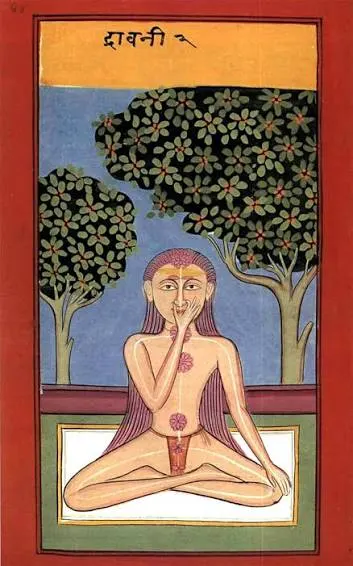
Kumbhaka ( holding the breath) stops ventilation while metabolism keeps running. O₂ slowly falls, CO₂ slowly rises. Eventually the system sends an increasingly urgent message: breathe. The chemoreceptors fire. Respiratory drive climbs…I want to breathe….Medula oblongata in the brain receives the message….
And the practitioner doesn’t breathe — not yet, he keeps on holding his breath.
An automatic homeostatic process meets voluntary consciousness. Cortex, brainstem, chemoreceptors, cardiovascular system and the felt sense of air hunger are all now in the same room. Pranayama may be training something well beyond lung capacity: the relationship between chemoreception, interoception, and cortical control, the brain.
The freediver and the yogi
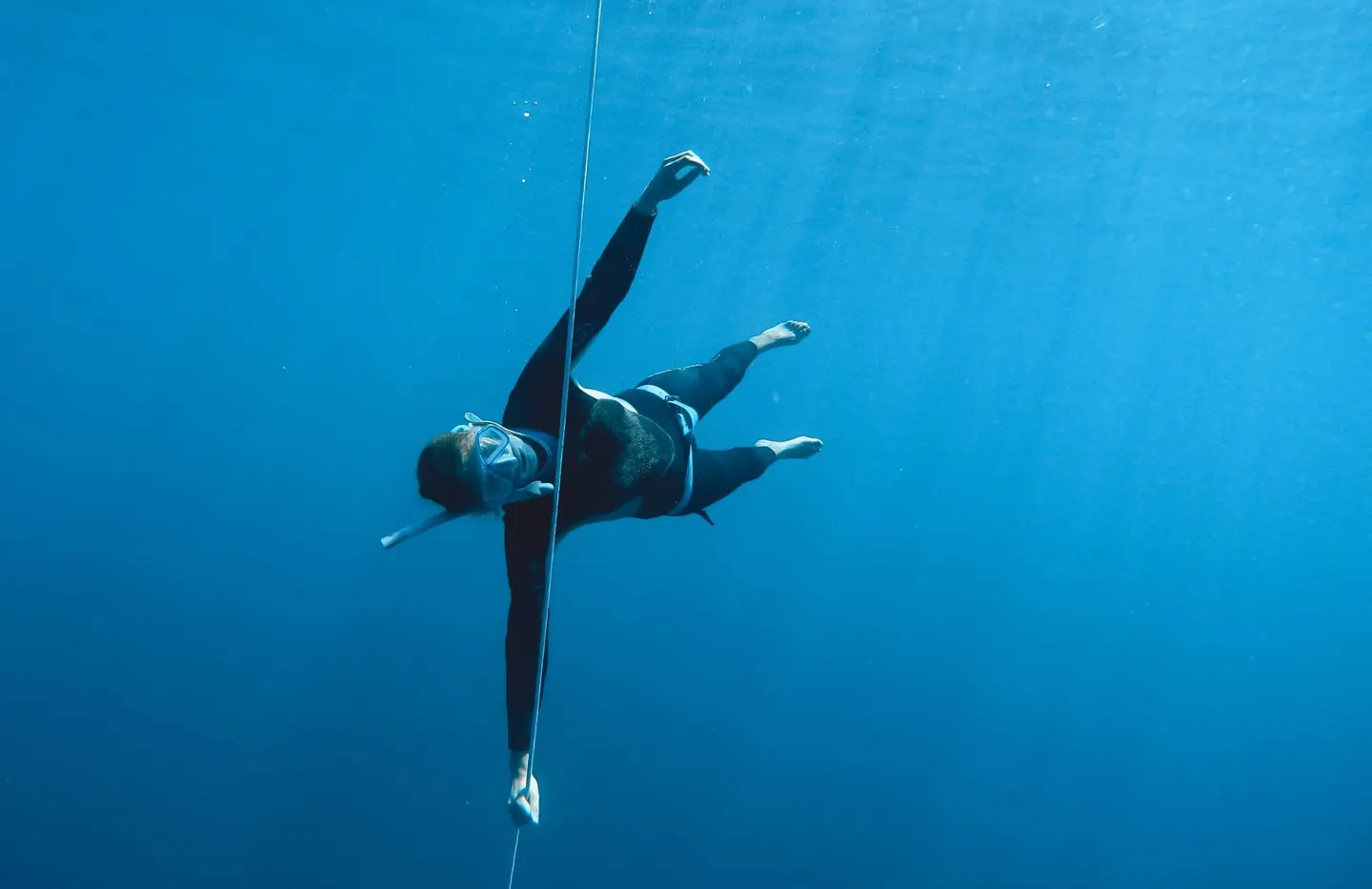
Freediving physiology offers an independent parallel. A prolonged breath-hold has an easy early phase — comfortable, even while O₂ falls and CO₂ rises — followed by a phase where the urge to breathe becomes hard to ignore, sometimes with involuntary contractions of the breathing muscles. The body starts trying to breathe before the person actually does. Automatic and voluntary drift apart.
Trained freedivers get remarkably good at staying still inside that gap — not purely “parasympathetic” calm, since heart rate slows, vessels constrict, CO₂ keeps climbing, and the diver is consciously negotiating an intensifying signal the whole time. The apparent stillness hides a lot of activity. That may be the clearest parallel to kumbhaka: not learning to stop detecting CO₂, but learning not to panic when you do.
Tolerance isn’t insensitivity
It’s tempting to think training just numbs the body to CO₂. The evidence is messier — some breath-hold divers show reduced ventilatory response to CO₂, but this isn’t uniform. What seems more accurate: physiological detection and conscious reaction are two different things. You can feel an intensifying respiratory drive and still change how you respond to it. That puts breath retention inside the broader territory of interoception — how we perceive and interpret signals from inside the body: heartbeat, pressure, tension, air hunger. This doesn’t mean high CO₂ is relaxing — strong retention can trigger real sympathetic and cardiovascular stress. The interesting phenomenon isn’t CO₂ equalling calm. It’s Regulation in the presence of CO₂.
Not all breathing is the same practice
Kapalabhati, bhastrika, slow pranayama and kumbhaka aren’t variations on one theme of “deep breathing” — they’re different physiological environments. Vigorous ventilation eliminates CO₂ fast and produces hypocapnia ( constricts blood vessels in the brain). Slow, unforced breathing shifts vagal tone, heart-rate variability and baroreflex activity. Kumbhaka suspends gas exchange entirely and lets chemistry drift the other way. “Breathe more” flattens all of this into one instruction, and misses most of what makes pranayama sophisticated and delightfully yogi art. The more interesting direction may not be more ventilation — it may be progressively greater respiratory Economy.
When the hold becomes a pause
Hatha yoga eventually points to something stranger: kevala kumbhaka, a suspension of breath described not as something forced but as something that arises. Physiology can’t fully explain that away, and it shouldn’t be retrofitted as secret ancient blood-gas knowledge — the texts were speaking inside a different conceptual world. But the comparison raises a real question: as metabolism slows, breathing quiets, attention stabilises and a practitioner spends years growing familiar with the sensations of retention, at what point does the pause stop feeling like something held?
Mūrchā adds another layer — classical texts describe altered states arising from specific patterns of retention, paired with bandha and attentional technique . Literally it means “swoon” or “fainting.” In classical hatha yoga texts — it shows up in the Haṭha Yoga Pradīpikā as one of the eight traditional kumbhakas — it’s a specific pranayama technique, not a side effect of holding the breath too long. The practitioner performs a retention, usually combined with jālandhara bandha (the chin lock) and often a fixed inward gaze, and the aim is to draw the mind sharply away from the senses until it folds in on itself — a deliberately induced, blissful loss of ordinary waking awareness. We shouldn’t casually map that onto hypoxia or hypercapnia — the sources give us no blood-gas data — but modern physiology hands us sharper questions to bring to these old practices: what happens to CO₂, to cerebral blood flow, to chemoreflex drive, to autonomic tone, and to consciousness, all at once? And because of Satefty reasons obviously , none of yoga schools are teaching this anymore and I completely agree…but still there is an epistemological curiosity..
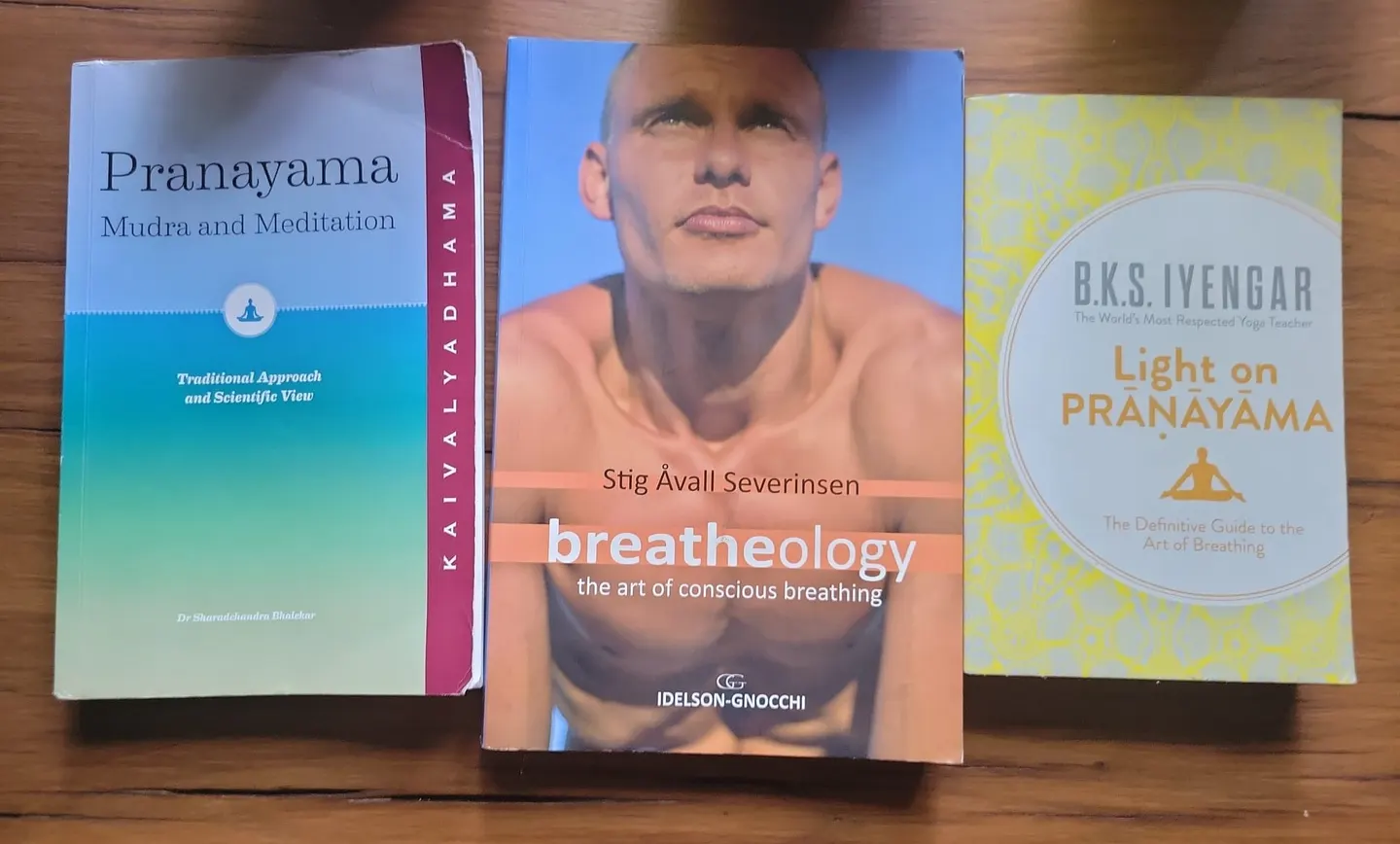
This is exactly what the early Kaivalyadhama researchers, under Swami Kuvalayananda, were reaching for — putting pranayama inside experimental physiology rather than philosophy alone. Their instruments belonged to another era. Their question didn’t: what happens when consciousness deliberately intervenes in respiration? A century later, freediving science, respiratory neuroscience and pranayama research are still circling it.
A different relationship with the need to breathe
We keep asking how much oxygen a technique delivers. But oxygen is one participant in a larger loop: CO₂ shifts pH, pH shifts haemoglobin’s willingness to release oxygen ( the Bhor effect), CO₂ shifts cerebral blood flow, chemoreceptors turn all of it into respiratory drive, respiration talks to circulation, circulation talks to the autonomic nervous system, and the whole thing surfaces in consciousness as interoception — which we can, within limits, respond to differently.
Pranayama sits inside that entire loop. The popular instruction to simply breathe more therefore misses much of the wisdom of pranayama. Its sophistication was never going to be measured by how dramatically someone can breathe. The more interesting trajectory runs the other way: from gross breathing to subtle breathing, from moving large volumes of air to economical ventilation, from deliberate retention to effortless pause.
Not more breath. A different relationship with the need to breathe.
For a brief period, kumbhaka makes an automatic biological imperative observable from the inside: CO₂ rises, the drive to breathe appears, the organism asks for air — and consciousness stays there, watching.
The place we don’t want to go
It’s easy to let all of this — chemoreceptors, vagus, Bohr effect — stay comfortably intellectual. Understanding the mechanism isn’t the same as practicing it.
There’s a moment in kumbhaka, well documented and entirely predictable, where air hunger stops being subtle and the nervous system says, with total conviction: breathe now. That’s the moment most practitioners exhale. It’s also the moment past which the practice actually begins.
To deepen kumbhaka is to consent to going somewhere most of us structure our lives to avoid: the place where the body is afraid. Not managed calm — fear, the specific, primal fear of not getting to breathe, arriving on schedule, and choosing to stay inside it anyway, without forcing the exhale early and without pretending it isn’t there.
This isn’t something to rush without preparation, guidance, and years of gradual retention. But it’s where pranayama stops being a breathing exercise. What kumbhaka actually asks is whether you can stay present while the body insists, with complete authority, that something has gone wrong — and discover, breath after breath, that nothing has.
REMEMBER..you go gradually in the practice and under the surveillance of an experimented teacher!!!!!
What the leaves already know
A leaf in daylight takes in CO₂ and releases oxygen. The same leaf at night reverses the exchange, taking in oxygen and releasing CO₂ as it respires like any living cell. Neither direction is the leaf’s true function and the other its waste. The leaf is not in the business of maximising one gas and eliminating the other — it is in the business of exchange, tuned to the hour, the light, the need.
Maybe this is closer to what pranayama is actually pointing toward. Not oxygen versus carbon dioxide. Not one gas virtuous, one gas expelled. The relationship between them — the continuous, intelligent conversation that never resolves into a single winner — is the thing itself.
Which means the breath was never only the oxygen part. Pūraka, kumbhaka, recaka — inhalation, pause, exhalation — are not three separate events with the middle one merely endured until the good part resumes. They are one flow, and the flow is already intelligent, the way the leaf is intelligent, before we do anything to it at all. Pranayama, at its most complete, is not a technique applied to the breath…but to matery of the mind in relation to the breath ….it is presence in motion..and more, for you to dicover, just practice.