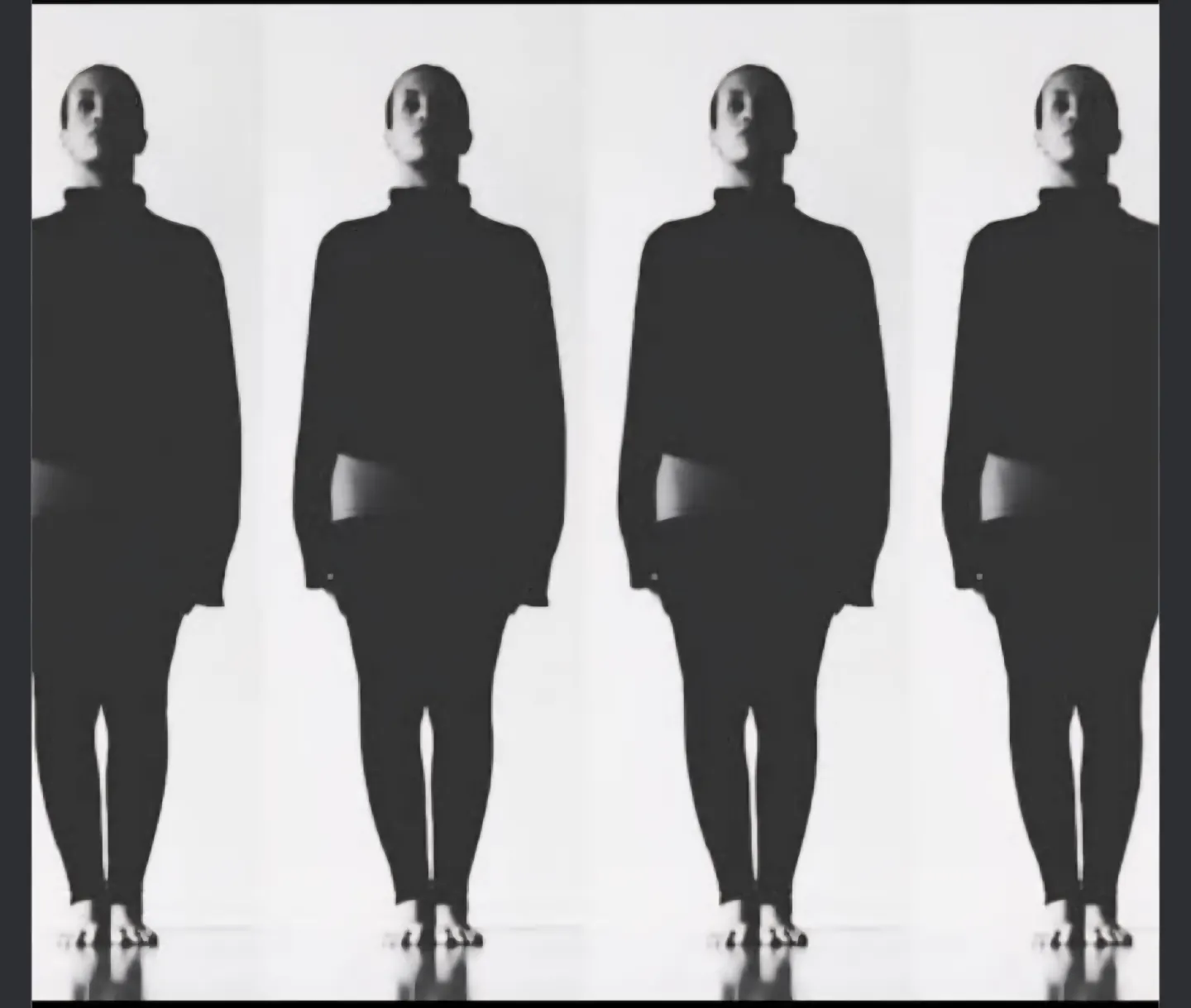
Tadasana/ Samasthiti/ Simple standing...
On the relationship we have with gravity!
Madalina Yoga Alliance E-RYT 500
Tell me how you stand and I'll tell you who you are...I always like to watch teenagers walk..there is a jump to their feet, a rebound to their steps, like they tease gravit somehow. Then I see old people crushing into the bones..curving twords the earth like a calling.
Watever comes from the elements goes back to the elements. And gravity is our daily life hustle, it is very hard to observe it's effects, because we are so used to being pulled by the gravitational force of the earth that we never notice the relationships we have with it.
In yoga asana practice, we strive to master the most extraordinary, spectacular postures, while standing on our own two feet still has so much to teach us. I mean, yeah, what is so glorious about standing, no insta picture to be taken there, no visual drama..
Tadasana. Samasthiti. Simple standing. The apparent simplicity of just standing, and the enormous depth within it. I like to explore the relationship with gravity, with grounding, with the earth beneath us and aslo with the sky above.
We learn to stand as children, then spend much of our lives taking it for granted. Understanding how we stand asks for attention, a self study and immense curiosity for things that nobody cates about.
Let's see how the feet receive the weight of the body, the earth offers support, and from that contact we grow upwards. Rooting and rising happen together.Also I like to push the earth with my feet, to resist, see what happens see if the earth pushes me back ;) or what happens in my body as a rebound..
The pelvis settles over the feet, the shoulders over the pelvis, and the spine lengthens; it is a living chain of actions .Everything is in relation with everything, the poke eachother and they react to eachother.
The explore the containment of the centre , the plumb line and the subtle support of bandhas ( i mean if u push the feet onto the earth this is where bandha actually starts..i’ll let u figure out this one on your own).In the language of the vayus ( the energy winds in the pranic body) we feel the meeting of apana and prana: downward grounding and upward expansion.They meet in the center of our body..and I ll let youfigure it out too wherethey meet...and then you also feel thatthe body is not only made of flesh ( sthula sharira) but also a body of energy ( shukshma sharira).
Our attention moves beyond muscular effort towards the bones, the spaces within the joints, the relationship that holds the body together, and also the feelings on the skin.There is a feeling of length through the whole skeleton, of energy moving through the body. The skin softens, extends, becomes opened for the senses. The same skin that contains us and separates us from the world is the skin that expands and releases.
Dona Holleman and Orit Sen-Gupta’s Dancing the Body of Light offers a beautiful framework for this exploration through rooting, connecting, breathing and elongating. Alongside it, Mabel Elsworth Todd’s The Thinking Body invites us to investigate how the body finds balance within gravity. There is an anchor ( a porteur as she call it ) and a dancer..light.u need to ne heavy for beeing light, both dualities work togheter.
Bringing these perspectives into Tadasana, we begin to feel how the feet, legs, pelvis, spine and head participate in one living structure. Standing becomes an attentive exploration of support, weight and space, an understanding we carry into movement.
Vanda Scaravelli’s Awakening the Spine brings another dimension to this exploration through the relationship between gravity, breath and the spine. Her approach invites us to discover length through grounding and release. In Tadasana, we can explore this as an upward unfolding from the support beneath our feet. A “straight back” becomes a sense of ease and direction through the spine, with its natural curves, its suppleness and its capacity to respond to breathing. The back becomes alive to our attention.Dona Holleman would say that the back is connected to our reptilian brain, ancestors brain. The back body is also the lunar energy, is connected to meridians that calm the nervous system.
Tadasana is also an exploration of symmetry.Equanimity...is the body is a replica of the universe, our search balance is maybe a search for connection to a higher relam.
How do we inhabit the left side and the right? Where does our weight settle? Where do we collapse, grip, or reach? We begin to understand balance through sensation, discovering how two different sides can participate in a shared centre. Through the traditional symbolism of Hatha—the sun and the moon—we explore complementary qualities associated with pingala and ida. Tadasana becomes an introduction to samasthiti, sameness, to evenness and steadiness, and, within the subtle-body map of yoga, an invitation to orient our awareness towards sushumna, the central channel.
This awareness extends to the back body and the sides, to places we can so easily leave outside our attention. We begin to inhabit the whole circumference of ourselves: front and back, left and right, the soles of the feet and the crown of the head. Each part exists in relationship with the others. A shift in the feet can be felt through the pelvis and spine; the position of the ribs influences the shoulders and the breath. We discover the posture through these relationships.
With the spine upright and untwisted, we can begin to understand the mechanics of our breath. We notice the movement of the ribs, the expansion around the trunk, the response of the body to each inhalation and exhalation. Alignment creates room for breathing, and breathing brings movement into the stillness of the posture.
Standing still, we cultivate stability, a sense of centre, and the capacity to observe. We feel the small adjustments through which balance stays alive. Our attention settles into the lower belly, the region known in Japanese traditions as the hara. We find a centre from which to breathe, to move, to practise. Movement begins from a steadiness we have taken the time to feel.
And this understanding travels with us. The length of the spine, the containment of the centre, the balance between our two sides, the awareness of the back body, the relationship with gravity, the connection between body and breath: we explore these same principles in headstand, handstand, Paschimottanasana, Prasarita Padottanasana, and so many other postures. The shape changes, the spine adapts, and the intelligence of Tadasana remains within the practice. Tadasana is a master key: we find our centre, and we practise from there.We root in the presence of Tadasana and we expand the exploration, always from a center.
It is inhabiting the inner space with equanimity. Watever it comes I'm in my center, balanced and present.
Maybe today ,spend some time in Tadasana, as long as is necessary for you to fully embrace the journey of inner knowing and questioning.