Chakras for Daily Life, Part 7: Sahasrara
The Seventh Chakra Is a Disaster
Madalina Yoga Alliance E-RYT 500
Every chakra widens the world.
The first teaches you to survive.
The second, to feel.
The third, to become.
The fourth, to love and expand...
The fifth, to express.
The sixth, to perceive.,to read your intuition.
Each one hands you a larger self. The path feels generous this way — every stage an expansion, every opening a gift. It is easy to believe the seventh chakra will simply be the biggest gift of all. The final upgrade. The self, at last, made whole…understood.
Then Sahasrara arrives, and it gives you nothing.
It does not enlarge the self. It ends the project of having one.Error 404…
❁
The Most Patient Disguise
No one begins the spiritual path trying to escape it. We begin honestly — searching for peace, for meaning, for God, for some ground beneath the noise. We meditate. We study. We refine ourselves, session by session, year by year…we persevere.
And somewhere in that refining, quietly, a new identity is born: the seeker.
The ego does not resist this kind of evolution. It rarely fights transformation — it just moves house. The ambitious person becomes the spiritual person. The collector of possessions becomes the collector of teachings and lineages and retreats. The hunger to succeed becomes the hunger to awaken.
Nothing was released. Only renamed.
“It was just a transfer of attachment.”
That is the whole story, in six words. The mind does not surrender its costumes — it upgrades them, and calls the upgrade liberation.
❁
The Knot That Guards the Knower - Seeker!
The Shiva Granthi is called the final knot because it protects the most convincing identity the mind will ever produce: the one who knows.
Not the one who owns a house, or a name, or a body. The one who understands. The one who has arrived. The one, quietest and proudest of all, who has become enlightened.
This is where the whole spiritual project turns into its own paradox. We climb toward Sahasrara imagining a crown waiting at the top — a reward, a final identity finished and framed. But the tantric traditions describe something almost embarrassing by comparison: there is no one left standing at the summit to receive it.
Sahasrara is not an accomplishment. It is the collapse of the one trying to accomplish anything at all.
No medal. No luminous upgraded self. No cosmic promotion. Only what remains once the searching runs out of a place to stand…no throne.
❁
The Joke Enlightened Beings Are Laughing At
So many traditions describe awakened beings laughing — not politely, but helplessly, as if something absurd has just been seen for the first time. Perhaps this is why: the seeker spent years chasing a prize, and the prize, once found, dissolved the very one who wanted it. History tells stories of many enlightened masters that couldn't stop laughing after enlightenment
The crown ( chackra) was never placed on the ego's head. It fell from it.
❁
Not the Body. Not the World. The Self, in Its Last and Finest Costume.
This is the real weight of the Shiva Granthi. It is not attachment to money. Not to relationships. Not even to the body.
It is attachment to the idea of me — now dressed in robes of wisdom, fluent in scripture, familiar with silence, comfortable calling itself consciousness, comfortable calling itself the Universe. This is the most elegant disguise the mind will ever wear, because it speaks in the very language meant to dissolve it.
And still, underneath every luminous word, the same old whisper persists:
Protect me.
Shiva asks for no such protection. There is nothing left in that recognition that needs defending.
In Kashmir Shaivism, the highest realization is not becoming Shiva, is more about a memoryact. REMEMBER..It is recognizing that separation was never anything more than a contraction of awareness — a habit of dividing the one continuous life into me and everything else. Nothing is added at the end. Nothing is achieved. The contraction simply relaxes.
❁
Sujata's Bowl
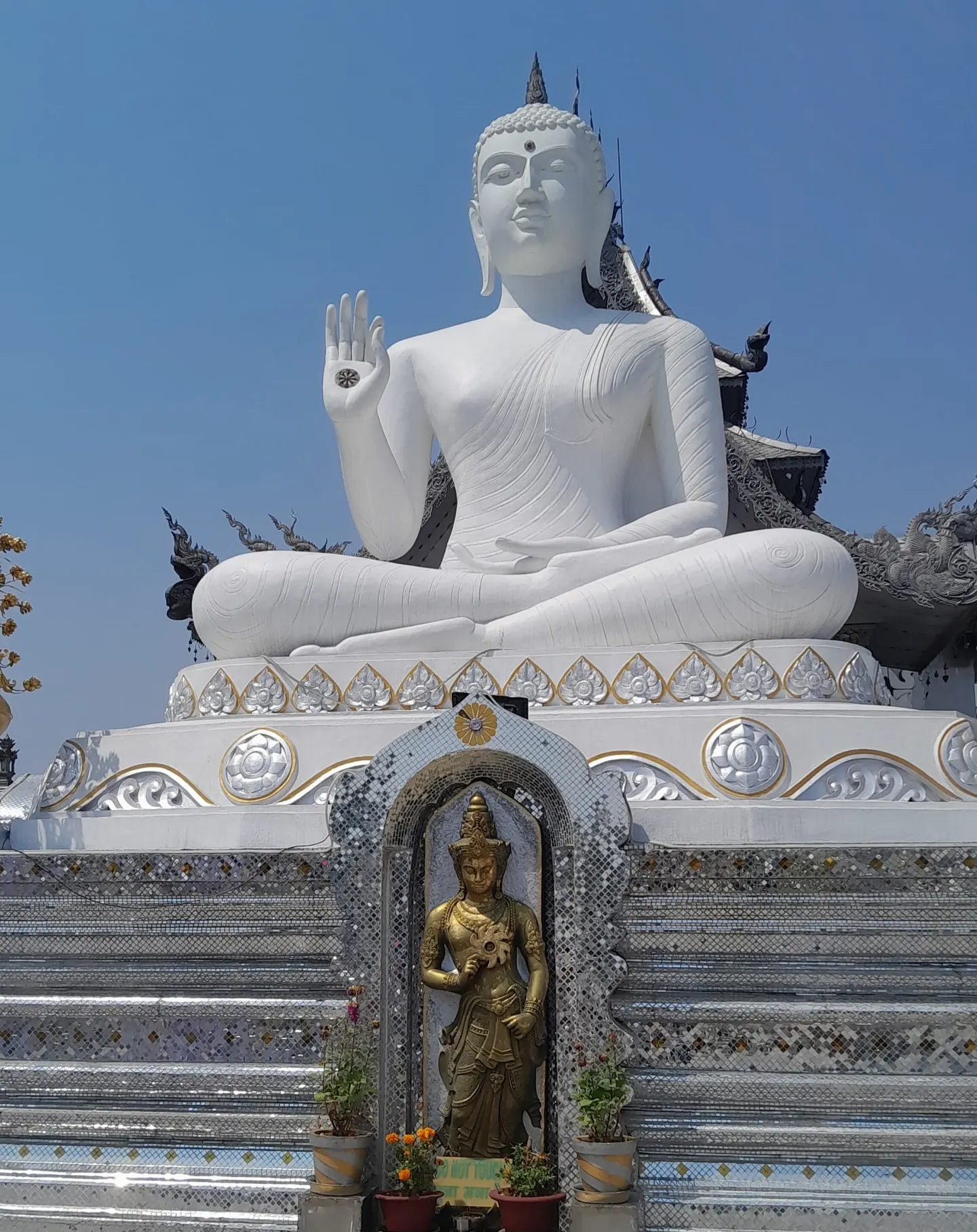
Before he was the Buddha, he was a man starving himself in his sadhana.
Six years in the forest. Six years of denial, of bones showing through skin, of believing that if the body could be punished enough, the spirit would finally be set free. This too was a form of seeking. This too was attachment wearing its most convincing costume — the ascetic, certain that illumination lives on the far side of deprivation.
He collapsed near a river, too weak to sit upright.
A village woman named Sujata found him there. She had come to make an offering to what she believed was a tree spirit, and in his emaciated stillness, she mistook him for one. She did not offer him a teaching. She offered him a bowl of milk and rice.
He ate.
And in that ordinary act — food, body, nourishment, life returning to a starved frame — something in him understood what six years of austerity had not been able to teach: the sacred is not reached by abandoning the body. It is reached through it.
He bathed in the river. Strength returned, slowly. He did not go back into the forest to punish himself further. He walked to a tree, sat beneath it, in the middle of the living world — roots below him, sky above him, breath moving in and out — and there, over weeks of stillness, integrated rather than annihilated, he woke up.
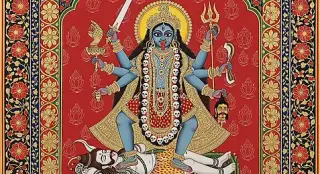
This is Shiva and Shakti, meeting at the root of the story. Consciousness alone, starving itself in the forest, is not awakening — it is only the ego rehearsing transcendence through denial. Shakti — the body, the nourishment, the pulse of life Sujata carried in a simple bowl — was never the obstacle to realization. She was half of it.
The crown chackra does not open by leaving the body behind. It opens when consciousness and life stop treating each other as enemies.
Sahasrara is not the reward for austerity. It is what becomes possible once the war between spirit and flesh finally ends.
❁
Not an Escape. The End of Escaping.
We tend to picture the crown chakra as an exit — the doorway out of the world, out of the body, out of the mess. Perhaps it is the opposite.
Perhaps Sahasrara is the end of every exit.
Not hiding in ambition.
Not hiding in relationships.
Not hiding in spiritual attainment.
Not hiding, even, in transcendence.
But just being here and now , completely.
What remains is not a higher world. It is this one — ordinary, unfiltered, unearned.
Messy. Magnificent. Enough. CHAOTIC..
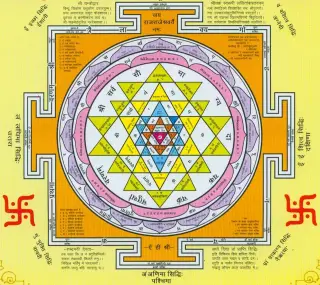
The thousand-petaled lotus does not open because someone finally became enlightened. It opens because there is no longer anyone left trying to own enlightenment.AND IT STARTS POURING NECTAR DOWNS FROM ITS PETALS.
And this, perhaps, is the disaster the seventh chakra brings.
Not a disaster for consciousness — consciousness loses nothing.
A disaster only for the last identity that believed, until the very end, that it could possess it.
❁
Correspondences
Sanskrit Name
Sahasrara (सहस्रार) — "thousand-petaled"
Location
Crown of the head
Element
Beyond the elements — pure consciousness
Color
Violet / White / Gold
Bija Mantra
Silence (OM, when sounded at all)
Petals
One thousand
Governing Principle
Union, transcendence, the dissolution of the seeker
Deity / Union
Shiva–Shakti united; consciousness and life inseparable
Knot (Granthi)
Shiva Granthi — attachment to the enlightened self
Shadow
Spiritual bypassing; identity disguised as awakening
Gift
Simplicity. Presence without a center demanding protection
❁
Closing Affirmation
I do not seek to become the light. I stop insisting that someone stand apart from it. What remains needs no name, and asks for no protection.Shivo ham..Shiva ham.