Weaving Silk Around Love
Butterflies, silkworms, limerence and the stories we spin around another human being
Madalina Yoga Alliance E-RYT 500
I love weaving stories about small creatures and big ideas. This one starts with butterflies in the stomach. That tingling felling you get inside and instead of ascribing it up to chemistry you start weaving too.. a Love story.
Such a beautiful expression for such a strange physical event. Somebody walks into a room and suddenly something moves us. The stomach contracts, attention sharpens, the body becomes alert and our mid is already taking out conclusions. We become acutely aware of where this person is standing, whether they are looking at us, whether they will come closer. Later we replay a sentence, a gesture, the way their hand touched the table. We call it chemistry. We call it a spark. Sometimes, very quickly, we call it love. I’m falling in love..but ckeck please the ‘fall’ word in the sentence.
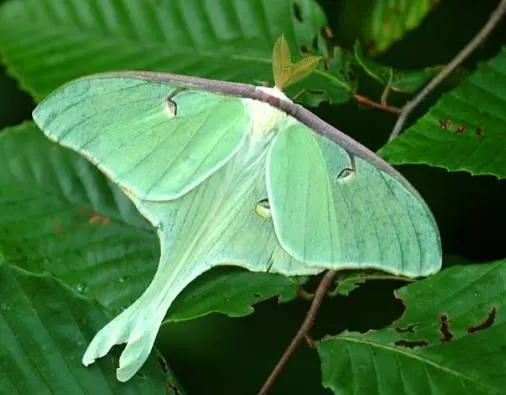
What if.. there aren’t butterflies in there at all. Maybe there is a Silkworm. Another tiny creature of the Metamorphosis world.
The silkworm is an extraordinarily, ordinary creature. It eats mulberry leaves almost continuously, grows, and eventually begins producing the filament with which it constructs its cocoon. We take that filament and make silk from it, one of the most sensual and beautiful materials humans have ever touched. Soft, erotic, luxurious, luminous, delicate and also extremely expensive. Only that, traditional silk production contains a rather brutal detail: to preserve the continuous filament, the cocoon is heated before the moth can emerge, killing the creature inside. If the moth were allowed to complete its transformation and break through the cocoon, it would damage the precious thread. The esthetic prevails the organic life of the cocoon. Something as fine as silk is born by a murdering act and also a theft. The artist has to die for the art, unwillingly.
I keep thinking that we do something similar with Love.L.O.V.E.
We transformed it into silk, a beautify product, a whole scenery of cosmetic romance till we killed the organic creature that lives inside. And that will never het to its full potential, whatever it is a moth or a butterfly.
But let’s go back first to our butterflies in the stomach. There is an initial sensation that is completely real. The nervous system responds to another nervous system. Attraction, novelty, uncertainty, sexuality and anticipation can alter the rhythm of our metabolism, narrow our attention and make another human being suddenly astonishingly important. None of this is imaginary, and none of it needs to be dismissed as “just chemistry,” because everything we experience has chemistry. Grief has chemistry, anger, hate, meditation has chemistry. The quiet pleasure of sitting beside someone I have known for twenty years has chemistry. Knowing the mechanism of an experience does not make the experience less real, but maybe more scientific.
The confusion begins when we decide what the sensation means, and we all have been raised with Disney movies and Cinderella stories. The conditioning is really strong, from Hollywood to Bollywood we have been told that the butterflies in the stomach are a sign of Romance.
Somewhere between the stomach and the imagination, we begin spinning silk. We are weaving a story that was borrowed from medias…any kind of media. A physical response becomes attraction, then significance, then possibility, and possibility becomes a story. Soon we are no longer simply interested in somebody. We are imagining them. We are anticipating them. We are wondering where this could go, what they meant by something they said, whether they are thinking about us, what the next encounter will feel like. The person has barely entered our life and already we are furnishing a room for them inside our head. We kill the cocoon for the esthetic silky drama that wraps it around.
Romantic culture has given us an enormous amount of material with which to spin this cocoon. We have been taught that love announces itself through intensity, that the right person should provoke something unmistakable, that chemistry reveals compatibility, that spontaneous sexual attraction contains some kind of truth.
Alain de Botton has spent much of his writing about relationships questioning this inheritance of Romanticism: the expectation that the right person should intuitively understand us, that love should feel natural, that sexual desire should confirm emotional compatibility, and that choosing the right person will somehow save us from the difficult work of learning how to live with another human being. We have inherited an extraordinarily beautiful mythology, but beauty is precisely what makes mythology appealing.
My body can tell me that I am activated by you. It cannot tell me who you are, whether you are capable of listening, whether you can tolerate frustration, whether you become cruel when you feel rejected, whether we can disagree without destroying one another, whether you can apologize, whether I can remain myself beside you, whether we are curious enough to keep discovering each other once novelty disappears. A stomach contraction cannot tell me whether we can build anything together, share same values, goals, tolerance and respect.
The Stoics understood something useful here long before neuroscience began mapping arousal and attachment. They distinguished between the impression that arrives and the judgment we make about it. Something happens to me: I want you. That is an experience. Then the mind moves in and says: therefore, you are special, therefore this must mean something, therefore I need you, therefore this should become something. The impression has become an interpretation, and the interpretation eventually becomes a world. Weavers. We are all taking threads of life and create stories with it…and this is beautiful, I m not against it .My ideas is that instead of weaving a story on an already made mold, what would it be if you start weaving on your own pattern and authenticity.
This is where limerence becomes particularly fascinating to me, because limerence barely requires the other person to be present. In fact, absence can feed it beautifully. When the person is gone, imagination has unlimited territory. We replay the conversation, interpret the silence, anticipate the message, imagine the next meeting, reconstruct the last one. We think we are thinking about the other person, but how much of the person occupying us is actually them?
The person who inhabits our mind is inevitably partly our creation. We take a handful of facts, gestures, touches, sentences and possibilities and complete the unfinished portrait ourselves. Desire is an extraordinarily talented writer. It fills the gaps..with silk.
Now, something that looks like love can quietly become a displacement of the self. Another person begins occupying the center of our attention without actually being there. We wake up thinking about them. We carry them through breakfast, work, practice, dinner. Their message alters the day; their silence alters it even more. Romantic culture treats this loss of center almost as proof of love. I cannot eat. I cannot sleep. I cannot concentrate. I cannot stop thinking about you. Look how much I love you….
But Intensity proves Intensity. It doesn’t prove love…
Maybe the person I am consumed by isn’t even the person I love. Maybe I am consumed by the silk I have spun around them.
One of my favorite psychologist, Esther Perel’s work on desire adds another complication because erotic desire and sustainable partnership do not necessarily flourish under the same conditions. Desire often enjoys distance, mystery, novelty, imagination and otherness, while partnership asks for familiarity, reliability, negotiation, repetition, patience and repair. We make a strange leap when we assume that the first is evidence for the second. Extraordinary sexual chemistry can exist between two people who are completely incapable of constructing a life together. Equally, profound intimacy can develop between two people whose first encounter did not produce fireworks.
This makes me wonder whether we have the chronology of love backwards. What if we start with the wrong footstep.
We tend to begin with attraction, butterflies, desire and sexual intensity, then gradually discover the human being underneath and hope that somewhere inside all of this there will also be patience, intelligence, generosity, humor, emotional maturity, curiosity, compatibility and the capacity to repair. We ignore the Pandora’s box that might come with it. We begin with the ending of the romantic film and then try to build the beginning of an actual relationship underneath it.
What if we began elsewhere?
Not by removing attraction, sexuality or pleasure from love, because that would be another kind of impoverishment. The body’s beauty matters and the desire attached to it. But what if attraction were allowed to remain attraction rather than immediately becoming evidence of inner beauty? What if another person could simply interest us before they became significant? What if we allowed intimacy to accumulate through conversation, attention, shared experience, disagreement, laughter, silence, difficulty and time?
Some relationships might begin without butterflies at all. There may be no thunderbolt, no obsessive checking of the phone, no sudden inability to eat or sleep. Somebody simply becomes pleasant to be around. Then interesting. Then trustworthy. We notice how they listen. We see how they behave when things don’t go their way. We discover that we can disagree. We learn the particular shape of their vulnerability and they learn ours. The body may even begin desiring somebody more deeply after safety and intimacy have developed.
And yet we have been taught to be suspicious of precisely this kind of beginning. Where is the spark? Where is the chemistry? Why am I not going crazy? We are confusing intensity with love.
Partnership is less dramatic than falling in love.Do not forget the ‘falling’ part. It requires patience, comprehension, openness, intelligence and the willingness to encounter another person as they actually are rather than as the answer to our private mythology. It requires accepting something almost offensively obvious: the person we love is not us.
It requires a sharp attention to the other, without embellishing the other, changing its content till the core of it almost disappears under our expectations and illusions. They will never perfectly understand us, anticipate every need or permanently satisfy every desire. They have an interior life that does not belong to us…and that is also thye beauty of it.
And this, to me, is where love becomes much more interesting than Romance.
To love someone might not mean allowing them to inhabit us. It might require exactly the opposite: being sufficiently rooted in ourselves that the other person is allowed to remain other.
When you are here, I can be completely here with you. I can listen to you, touch you, desire you, laugh with you, argue with you, eat with you, make love to you, become irritated by you, discover you. When you leave, I can return to my own life. You may cross my mind. I may miss you. I may remember your body or smile at something you said. But I do not need to continue manufacturing you in your absence. You are not a bubble of silk , but raw uncontain and sometimes particularly ugly.
There is an enormous difference between carrying affection for somebody and making them the center from which we experience our own existence.
Presence changes the entire architecture of love. If I am actually present, I don’t need today’s tenderness to guarantee tomorrow. I don’t need to turn a beautiful evening into a prediction or a Netflix serie. I don’t need to ask what this means while it is still happening. I can allow an encounter to have its own value without immediately forcing it into a narrative.
This is not an argument for detachment in the cold sense, nor for turning relationships into rational negotiations between perfectly self-contained adults. Human beings attach. We miss each other. We fantasize. We become vulnerable. We sometimes lose our footing. Love would be very poor if we tried to sterilize it of all the madness that comes with it and the vulnerability.
There is only one person I can inhabit completely during this life, and that is myself. Not because I should become closed to others, but because this is the only place from which a genuine encounter can happen. If I abandon that center and move into my idea of you, eventually neither of us is present. You have been replaced by my projection, and I have been replaced by the person who is waiting for you. Is basically a murderous act..a sad violent killing of the silk worm. Thers is no silk if the worm dies. Organically speaking.
Two people who remain rooted in themselves can meet. Two projections can only collide.
Maybe this is why mature love sometimes looks quieter from the outside. It doesn’t necessarily consume the people inside it. It gives them room. It can contain sexuality without making sexuality its proof, intimacy without possession, attachment without occupation, tenderness without prophecy. It allows two people to remain alive enough to keep surprising one another.
Which brings me back to the silkworm…which I’m becoming particularly found of.
The tragedy of silk is that we become so interested in preserving the beautiful thread that we interrupt the transformation of the creature that made it. Romanticism can do something similar. We become so attached to how love is supposed to look and feel that we suffocate the living relationship inside it. We preserve the spark, pursue the butterflies, protect the fantasy, demand that desire remain recognizable, and wonder why the creature underneath cannot breathe properly.
This is not a manifesto against romance. I like romance. I like desire, beautiful bodies, ridiculous attraction, sex, longing and the absurd electricity of discovering someone new. I don’t want a world without butterflies.
I simply don’t want to ask let them tell the story.
Let the sensation be a sensation in a very stoic way. It is what it is. Let another human being remain mysterious because they actually are another human being, not because we have filled the unknown with fantasy we were fed since kids. Let relationships change form. Let desire intensify, disappear, return, become tenderness, become friendship, become partnership, become something for which we don’t yet have a name.
Above all, let the creature live its own unique way of expression. In a world that seems so diverse, we normalize the only thing that makes us divine: love. So, allow the creature to love without wanting to harvest the imaginary outcome of a good story.
Because love may have much less to do with preserving the silk, rather than with allowing whatever is inside it to complete its transformation on its natural rhythm.